Train that NEVER STOPS

Saturday, April 24, 2010

Chinese Concept - The train that never stops at a station:
A brilliant new Chinese train innovation - Get on & off the bullet train without the train stopping.  VERY COOL CONCEPT!  No time is wasted.  The bullet train is moving all the time.  If there are 30 stations between Beijing and Guangzhou, just stopping and accelerating again at each station will waste both energy and time.
 A mere 5 min stop per station (elderly passengers cannot be hurried) will result in a total loss of 5 min x 30 stations or 2.5 hours of train journey time!


How it works:

1. For those who are boarding the train: The passengers at a station embarks onto to a connector cabin way before the train even arrives at the station.  When the train arrives, it will not stop at all.  It just slows down to pick up the connector cabin which will move with the train on the roof  of the train.  While the train is still moving away from the station, those passengers will board the train from the connector cabin mounted on the train's roof.  After fully unloading all its passengers, the cabin connector cabin will be moved to the back of the train so that the next batch of outgoing passengers who want to alight at the next station will board the connector cabin at the rear of the train roof.

2. For those who are getting off: As stated after fully unloading all its passengers, the cabin connector cabin will be moved to the back of the train so that the next batch of outgoing passengers who want to alight at the next station will board the connector cabin at the rear of the train roof.  When the train arrives at the next station, it will simply drop the whole connector cabin at the station itself and leave it behind at the station. The outgoing passengers can take their own time to disembark at the station while the train had already left.  At the same time, the train will pick up the incoming embarking passengers on another connector cabin in the front part of the train's roof.  So the train will always drop one connector cabin at the rear of its roof and pick up a new connector cabin in the front part of the train's roof at each station.

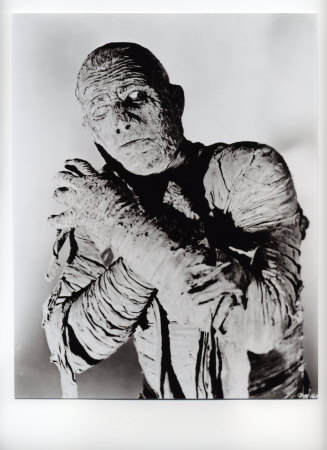
Secret of Mummies

Thursday, April 1, 2010


The word mummy derived from early spectators who presumed that mummies were covered with bitumen, which meant in Persian moumia and therefore took the modern name mummy. Whether it’s been preserved naturally or deliberately, all mummies must survive the duration of time. Gaining most of its fame from Egypt, mummies also exist in many other ancient cultures and countries. Countries such as China revealed the Cherchen mummies, which were preserved almost perfectly. Another place, such as South America, revealed three children from the Incas who were relics of a sacrificial ritual and were found frozen atop Argentina’s Mount Llullaillaco, which is about 22,000 feet high.  Although mummification existed in other cultures, eternal life was the main focus of all Ancient Egyptians, which meant preserving the body forever.

Mummification- How mummies were made
The first attempt to preserve the dead is recorded as early as 3000 BC. After the death of an Egyptian, the embalmers where called by family members and the body was taken to the ibu, “the tent of purification.” the body would go through a process that lasted seventy days, no longer. Once brought to the ibu, the carcass was cleaned with water containing the purifying agent natron. This process represented the rebirth of the deceased.

After being washed and cleansed, the carcass was taken to the wabet, the “palace of embalming.”According to Herodotus, a large incision was made on the left side of the abdomen. This incision, which was cut with a flint knife, was used for removing vital organs such as the intestines, liver, lungs and stomach.  

After the body had been cleansed and the organs removed, the body is dried. For this large amounts of natron salt packed around the body until the 70th day, when the body was desiccated. After being dried in the bed of natron salt, the body is then washed and all traces of the salt removed.
The cadaver is then taken to per nefer, “the house of beauty,” where it is stuffed and shaped back to its normal size. Many perfumes and oils were rubbed on the body and the open wounds were filled and covered with wax. Over the wax a metal plate decorated with symbols of protection sealed the wounds. After the anointing was completed, molten resin was added to cover the body. Both men and women would be colored with ochre. The men would be colored red and the women yellow. 
Colored and stuffed, it’s was then ready to be wrapped. The wrapping process lasted fifteen to thirteen days. Special fine cloth with spells written upon them were used. Most of the time, sheets of linen were used as the main wrapping material. This process was done until the body was protected from head to foot in linen. After being covered, the body was covered with a death mask made of papyrus or linen and reinforced with plaster. Royal mummies, such as Tutankhamun’s, were made of gold and held precious and semiprecious stones that were inlaid. The mummy was then packaged and ready for the afterlife and was placed into its coffins and laid to rest in its tomb. 

Petronas Tower

Tuesday, March 23, 2010

The Petronas Twin Towers (also known as the Petronas Towers or just Twin Towers), in Kuala Lumpur, Malaysia were the world's tallest buildings from 1998 to 2004, when their height was surpassed by Taipei 101. The towers remain the tallest twin buildings in the world.

Height: 1,483 ft (452 meters)
Owners: Kuala Lumpur City Centre Holdings Sendirian Berhad
Architects: Cesar Pelli & Associates
Engineers: Thornton-Tomasetti Engineers
Contractors: Mayjus and SKJ Joint Ventures
Topping Out: 1998


Official Opening: August 28, 1999 

History of Construction:

 Petronas, Malaysia's national oil company, set out to build the world's tallest building. Although other buildings such as the Sears Tower have higher occupied floors, a higher pinnacle, and a higher roof, the Petronas Towers' spires are classified as architectural details and rise to 452 m (1483 feet)--the highest feature classified as an architectural detail on a high rise until Taipei 101.
The towers were designed by architect César Pelli, were completed in 1998. The 88-floor towers constructed of largely reinforced concrete with a steel and glass facade were designed to resemble motifs found in Islamic art, a reflection of Malaysia's Muslim heritage. They were built on the site of Kuala Lumpur's race track. Because of the depth of the bedrock the buildings were built on the world's deepest foundation going down some 120 meters and requiring massive amounts of concrete. In an unusual move, a different construction company was hired for each of the towers, and they were made to compete against each other. 

Eventually the builders of Tower 2, Samsung, won the race, despite starting a month behind Tower 1, built by Hazama Corporation, although Tower 2 ran into problems when they discovered the structure was 25 millimeters off from vertical. Due to a lack of steel and the huge cost of importing steel, the towers were constructed on a cheaper radical design of super high strength reinforced concrete. High-strength concrete is a material familiar to Asian contractors and twice as effective as steel in sway reduction. Supported by 23-by-23-metre concrete cores and an outer ring of widely-spaced super columns, the towers showcase a sophisticated structural system that accommodates its slender profile and provides from 1300 to 2000 square metres of column-free office space per floor.

Cannibalism - Eating of Human by Another Human

Monday, March 8, 2010

Cannibalism  a West Indies tribe well known for their practice of cannibalism), also called anthropophagy, is the act or practice of humans eating the flesh of other human beings.Cannibalism has recently been both practiced and fiercely condemned in several wars, especially in Liberia and Congo. Today, the Korowai are one of very few tribes still believed to eat human flesh. It is also still known to be practiced as a ritual and in war in various Melanesian tribes.

Reasons for cannibalism

The reasons for cannibalism include the following:
  • As sanctioned by a cultural norm
  • By necessity in extreme situations of famine
  • Caused by insanity or social deviancy
There are fundamentally two kinds of cannibalistic social behavior; endocannibalism (eating humans from the same community) and exocannibalism (eating humans from other communities).
A separate ethical distinction can be made to delineate between the practice of killing a human for food (homicidal cannibalism) versus eating the flesh of a person who was already dead (necro-cannibalism).

There are many forms of spiritual and ritualistic cannibalism worldwide. 
Exocannibalism:
Exocannibalism is defined as a culture, group or tribe's consumption of another culture, group or tribe. This form of cannibalism has been associated with tribal power, murder and aggression and has been used in an effort to scare off possible invading enemies, to get rid of captured enemies of war and slaves. Many cannibalistic tribes believed that consuming one's enemy would allow them to obtain and absorb the spirit and skills of the victim. 

Endocannibalism:
Conversely, the consumption of members within one's own culture, group or tribe is called Endocannibalism, which is often associated with ritual burial ceremonies and has been controversially referred to on occasion as "compassionate cannibalism." Mortuary cannibalism has been considered to be the most widely practiced form of endocannibalism, often excluding murder and focusing on already deceased corpses.


The ancient Aztecs in Mexico were believed to have sacrificed and cannibalized thousands of humans on an annual basis. The Aztecs were believed to have practiced exocannibalism, as well as endocannibalism and survival cannibalism. Human sacrifice and cannibalism was practiced in an effort to create a universal balance between of the world and the cosmos.

Other cultures participated in endo- and exo-cannibalism for similar reasons, such as The North American Indians, known as the Iroquoian. They believed that sacrificing and consuming the bodies of their enemies would satisfy their war god and lead to their spirit being transferred and absorbed into their own bodies. The absorbed spirit was believed to empower the cannibal with the attributes of the dead person. Moira Martingale, author of Cannibal Killers, claims that this form of ritualistic cannibalism was practice by the Iroquoian culture as recently as 1838.

Funny cats

Tuesday, March 2, 2010


Snow snow snow

Wednesday, February 17, 2010


using leading European technologies has ensured exceptional quality of our parquet flooring

Mac Book in Book

Monday, February 1, 2010


Amazing and creative laptop bag.